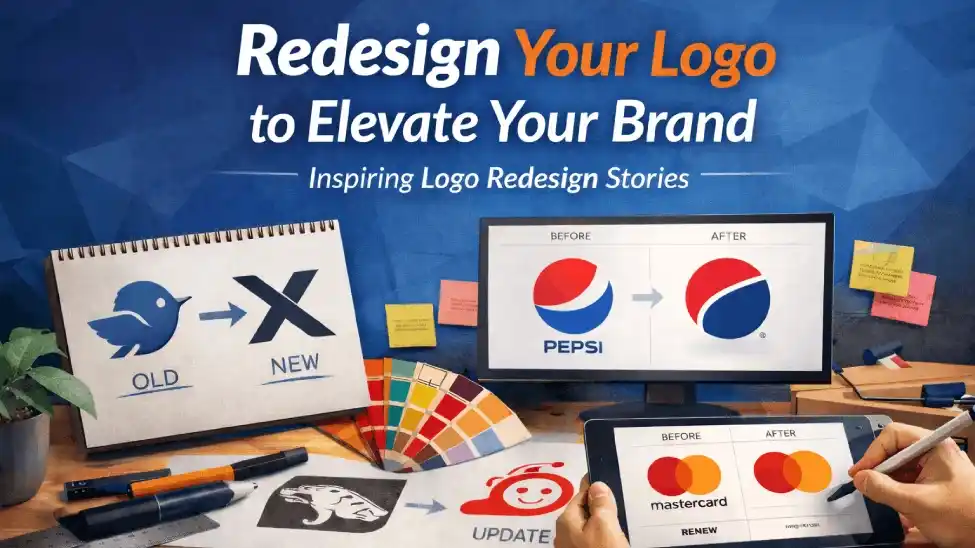
Absolutely. We can work within your current brand system or help modernize, refine, or fully redesign your branding while maintaining it. Every IndiWork project includes structured revision rounds tailored to the scope, typically 2-3 rounds for most deliverables. We build in time for thoughtful feedback and refinement, so you get designs that truly work, not endless back-and-forth. Our goal is collaboration that respects both quality and your timeline. Our collaborative approach ensures feedback is incorporated efficiently without unnecessary delays.
Website Redesign Questions to Ask Your Agency in 2026
In the digital-first world of 2026, your website is more than just a business card—it’s your most powerful marketing asset. As customer expectations, technology, and design trends evolve, your website must keep up. A dated or underperforming site can hurt credibility, rankings, and conversions.
Whether you’re planning a rebrand, experiencing growth, or simply realizing your site isn’t delivering the results it should, a website redesign could be the right move. But before you dive into the process, it’s critical to ask the right questions.
This guide outlines essential questions to ask your agency (and yourself) before starting a website redesign—updated with the latest trends in UX, SEO, AI, and accessibility in mind.
"Does my website’s visual identity—including colors, typography, imagery, and tone—consistently reflect my current brand and messaging?"
1. Is Your Website Design Still Aligned With Your Brand Identity?
Brands evolve, and so should your website. If you’ve recently undergone a rebrand, launched new products, or shifted your company’s positioning, your site should reflect those changes consistently across all digital touchpoints.
2026 Trend: Unified brand experiences across platforms—including websites, social media, and even voice assistants—are expected by users. A redesign is your chance to align your digital identity across the board. This trend is drivenby the increasing interconnectedness of digital platforms and the growing importance of omnichannel marketing strategies.
- Does my site visually and tonally represent my current brand?
- Do the colours, typography, and imagery align with my updated messaging?
2. How Well Does Your Website Differentiate You From Competitors?
In saturated markets, standing out is critical. Your website should communicate your unique value proposition (UVP) and position your brand as an expert in your niche.
2026 Trend: Storytelling design, custom illustrations, and subtle micro-animations are being used to build emotional connections and trust.
- What makes our online experience different from our competitors'?
- Are we using visuals and messaging that convey our brand's personality and promise?
3. Is the User Experience (UX) Friction-Free and Intuitive?
Visitors expect lightning-fast, intuitive, and frustration-free digital journeys. UX is more than just nice design—it’s how people interact with your brand.
2026 Trend: Predictive UX, based on behaviour analytics and AI personalization, is gaining traction. Users expect smart navigation, minimal clicks, and content that serves a purpose.
- How quickly can a new visitor understand what we do?
- Are our calls to action (CTAs) clear and well-placed?
- Is the buyer journey optimized for conversions?
4. Is Your Website Optimized for All Devices? (Responsive + Adaptive)
A mobile-optimized site is non-negotiable. With users accessing content across multiple devices—from smartphones to tablets to smart TVs—your website must be responsive and adaptive.
2026 Trend: Mobile-first design and adaptive interfaces that respond to user context (location, time, preferences) are essential for engagement and retention.
- Does our site perform flawlessly on mobile devices, tablets, and desktops?
- Are mobile CTAs placed for thumb-friendly navigation?
5. How Fast Is Your Website? (Core Web Vitals Matter)
Page speed affects everything—bounce rate, SEO, conversions. Google’s Core Web Vitals remain critical ranking factors in 2026.
2026 Trend: Sites using headless CMS, static site generators, and advanced caching strategies are outperforming traditional CMS platforms.
- Are we scoring well on Google PageSpeed Insights?
- Can we improve our Largest Contentful Paint (LCP), First Input Delay (FID), and Cumulative Layout Shift (CLS)?
6. Is Your Website Accessible to Everyone? (ADA Compliance)
An inclusive website isn’t just ethical—it’s a legal requirement in many countries. Accessibility ensures your content is usable by people with disabilities.
2026 Trend: AI-powered accessibility tools and WCAG 2.2 guidelines are now standard. Accessibility improves SEO and UX.
- Is our site compliant with WCAG standards?
- Are we using alt text, keyboard navigation, and screen reader support?
7. Are You Integrating AI or Personalization Features?
AI-powered tools can enhance user experience through chatbots, personalized product recommendations, and dynamic content tailored to user behaviour.
2026 Trend: AI-driven personalization engines are becoming the norm, offering custom content, search results, and recommendations.
- Are we leveraging AI to enhance engagement and personalization?
- Could a chatbot or recommendation engine benefit our site?
8. What Metrics Will Define the Success of the Redesign?
Redesigns should be data-driven and tied to KPIs—whether it’s more conversions, lower bounce rates, or improved SEO performance.
- What are the top 3 goals we want the redesign to accomplish?
- How will we measure progress (analytics, heatmaps, A/B testing)?
9. What's Your SEO Strategy for the Redesign?
A new website is worthless if it doesn’t rank well in search engines. SEO must be integrated into the redesign, rather than being treated as an afterthought.
2026 Trend: Semantic SEO, EEAT (Experience, Expertise, Authoritativeness, and Trust), and zero-click optimization are top priorities.
- Will URL structures, metadata, and redirects be handled appropriately?
- How will we maintain or improve keyword rankings during the transition?
- Are we optimizing content with EEAT and structured data?
10. What Is the Realistic Timeline and Budget?
Clear expectations upfront prevent misunderstandings later. Know what you’re investing in and what your timeline realistically looks like.
- What is the estimated project timeline, including QA and testing?
- What is included in the budget (strategy, design, development, SEO, support)?
11. What Post-Launch Support Will Be Provided?
A successful redesign doesn’t end at launch. You’ll need support for updates, monitoring, maintenance, and iterative improvements.
- Will we receive training on how to manage content?
- Are monthly maintenance or performance audits included?
12. Are You Future-Proofing the Website?
Your new website should be scalable and easily adaptable to your business’s evolving needs.
2026 Trend: Modular design systems, API-first architecture, and low-code tools are helping brands stay agile post-launch.
- Can we easily add pages, update content, or scale features in the future?
- Is the site built on a flexible CMS or tech stack?
Your website is your digital storefront, your top salesperson, and often your first impression. A thoughtful, strategic redesign—backed by the right questions—can elevate your brand, drive growth, and future-proof your online presence.
Before you choose a website design agency, make sure they understand not just how to build a website, but how to create a digital experience that performs.
Need help planning an innovative redesign in 2026?
Let’s discuss how we can transform your website into a powerful growth engine. Contact us today or schedule a consultation.
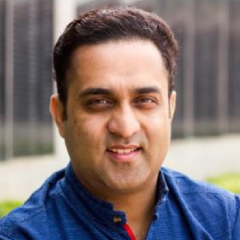
Vikramjit Jamwal
Vikram Jamwal is the Director of Technology at IndiWork, bringing over 30 years of expertise in web development, digital strategy, and scalable technology solutions. As a Computer Science graduate, Microsoft Certified Developer, and Google Certified Professional, Vikram is recognized as an industry thought leader in building high-performance digital ecosystems that consistently deliver measurable business impact. His portfolio includes collaborations with organizations ranging from agile startups to Fortune 500 enterprises, earning him a reputation for practical innovation and a results-driven mindset. Vikram specializes in empowering companies to maximize their digital presence, transforming websites into powerful engines for growth, customer engagement, and operational efficiency. His legacy of excellence is evident in long-term client partnerships and enthusiastic client testimonials. Outside of work, Vikram is an avid golfer, passionate hiker, and country music enthusiast.
Still have Questions?
Can you work with our existing brand guidelines or redesign them?
What is the typical turnaround time for design projects?
At Indiwork, we balance speed with quality. Typical timelines:
- Logos & brand identity: 1–2 weeks
- Marketing collateral & social creatives: 3–7 business days
- UI/UX & complex digital projects: 2–4 weeks
- Rush projects? We can accommodate tight deadlines when needed. Every timeline is confirmed upfront, so you can plan with confidence.
How does your design process work?
IndiWork’s design process is collaborative and transparent: we start with discovery and strategy, move into creative concept development, execute the design with precision, incorporate your feedback through structured revision rounds, and deliver polished final assets. You’re a partner at every milestone—we create with you, not just for you.
Can you help us decide what type of design services we actually need?
Absolutely. This is where IndiWork’s strategic approach shines. Many businesses know they need “better design” but aren’t sure where to invest first. We analyze your market position, customer journey, and growth goals to recommend the exact mix of branding, digital, and marketing assets that will move the needle—whether that’s a rebrand, a high-converting website, or campaign visuals that actually sell.
How do you ensure the design aligns with our brand and business goals?
At IndiWork, we never design in a vacuum. Every project starts with a strategic discovery session where we dive into your brand DNA, target audience psychology, competitive landscape, and business goals. This foundation ensures every color, font, layout, and visual element works together to tell your story and drive real business results, not just look pretty.