We recommend CMS platforms based on ease of use, scalability, security, and long-term flexibility, not trends. Depending on your needs, we often work with WordPress, Drupal, Joomla, Webflow, Craft CMS, Squarespace, and Umbraco for websites that do not require a shopping cart feature.
Best Practices for Home Page Design
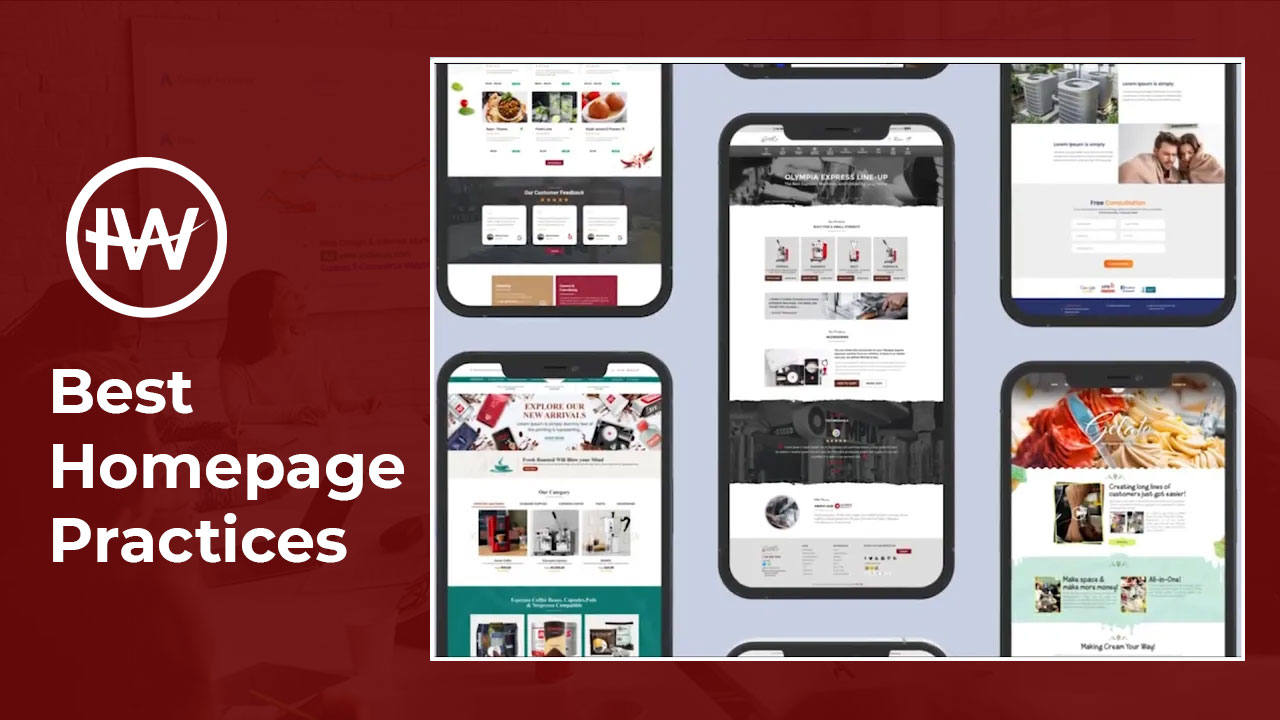
The home page is the most important landing page for your website. This is the first impression your business makes to visitors. Here are a few best practices for a home page design that is essential to create a positive user experience and encouraging visitors to explore your site further. Here are some of the best home page practices to follow:
- Value Proposition: Your home page should communicate what your website offers and why it is valuable to visitors. This can be done through a clear headline, subheading, and supporting text. Use images and graphics to reinforce your message and make it visually appealing.
- Concise Navigation: Your home page should have clear and concise navigation allowing visitors to find what they are looking for quickly. Use a simple menu structure and avoid cluttering the page with too many options. Use drop-down menus for additional options, and make sure your navigation is consistent across all site pages.
- Search Box: A search box is an essential element of a home page, allowing visitors to find the content they are looking for quickly. Make sure your search box is prominently displayed and easily accessible from all pages of your site. Use predictive search to provide instant results and improve the user experience.
- Mobile Responsive: With most internet traffic now coming from mobile devices, your home page must be mobile responsive. This means your site should automatically adjust to fit the device’s screen size. Ensure your images, text, and navigation are all optimized for mobile devices.
- Social Proof: Social proof is a powerful way to express that it can help build trust with your visitors. Use customer testimonials, reviews, and social media mentions showing that your website is trusted and respected. Use logos of recognizable brands that have used your services or products.
- Live Chat: Live chat is a great way to provide instant support to your visitors and answer any questions. Make sure your live chat is prominently displayed on your home page and easily accessible from all pages of your site. Use chatbots for basic questions and to improve response times.
In conclusion, your home page is visitors’ first impression of your website, so it must be designed with best practices in mind. By following these tips, you can create a home page that is both visually appealing and user-friendly and that encourages visitors to explore your site further. Remember to keep your messaging clear and concise, your navigation simple and consistent, and your site mobile responsive. Incorporate social proof to build trust and provide live chat for instant support. With these elements in place, your home page will be a powerful tool for driving conversions and building your online presence.

IWSS Staff
The IWSS Staff team comprises seasoned engineers, developers, SEO specialists, and digital marketers with deep expertise across diverse industries. With a proven track record in delivering successful digital solutions, the team brings first-hand experience and up-to-date knowledge to every article. IWSS Staff is dedicated to providing well-researched, accurate, and actionable insights on search optimization, digital marketing trends, and website performance. Their content is guided by principles of expertise, authoritativeness, and trustworthiness, helping both businesses and readers navigate complex topics with clarity and confidence.
Still have Questions?
Which CMS platforms does IndiWork recommend for website development?
What do you need from us to get started on a website project?
We typically need clarity on your business goals, target audience, and website objectives, features, and functional scope. If you have brand assets, content, or inspiration sites, that’s helpful but not mandatory. You can connect with us on a call, and our experts can guide you and lay out the details for you.
Can IndiWork redesign or rebuild an existing website?
Absolutely. Whether your site looks outdated, loads slowly, or isn’t generating leads, we can redesign or rebuild it with a modern structure and improved performance while preserving important content and SEO value wherever possible.
Will my website be mobile-friendly, fast, and SEO-ready?
Every website we build follows mobile-first design, responsive layouts, clean code, and performance best practices. We also lay a strong SEO foundation with optimized structure, page speed, and on-page essentials to support long-term search visibility.
How long does it take to design and develop a custom website?
Project timelines depend on scope, features, and content readiness. Most custom websites take 3 to 6 weeks, covering discovery, design, development, testing, and launch. We define clear milestones upfront for every project so you always know what’s happening and when.