AISO Guide : Feature Your Brand in ChatGPT, Gemini, Copilot & More
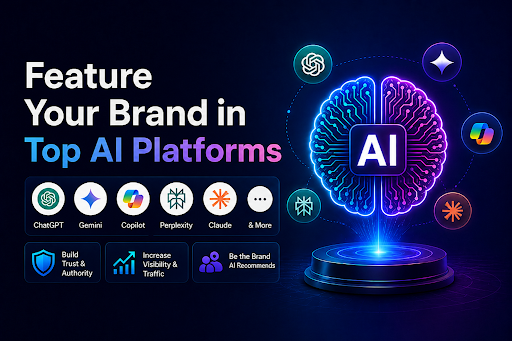
How people search for information is changing faster than ever. A few years ago, everyone typed short keywords into Google. Now, people are having full conversations with AI tools and AISO is becoming an important part of how they find answers.
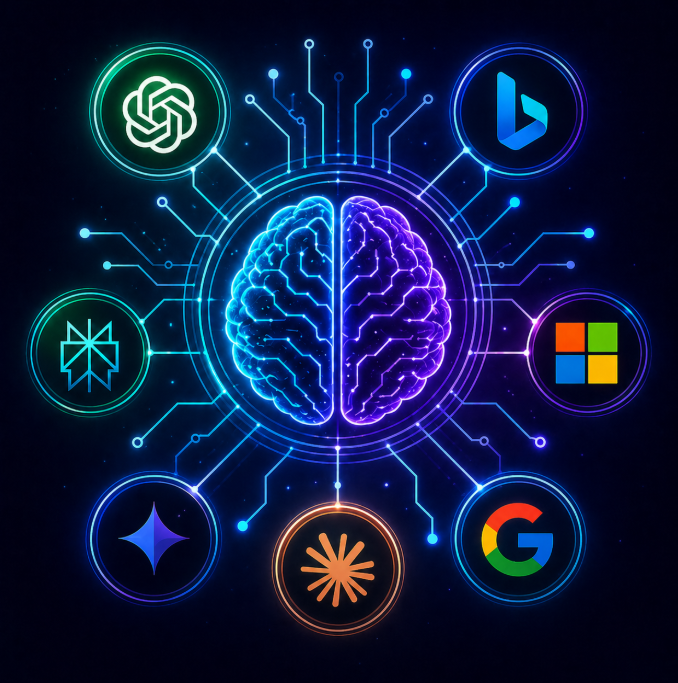
But every AI works differently on the inside. Memory-based systems like ChatGPT and Claude draw from trained knowledge and conversation context to generate answers. Search-connected platforms like Perplexity AI and Microsoft Copilot pull live information from the web before responding. Hybrid systems like Google Gemini and Grok do both blending real-time retrieval with deep model knowledge.
If you run a business or work in marketing, this is something you really need to pay attention to. Showing up on Google alone just does not cut it anymore. You now need to ask a different question: “Is AI recommending my brand?”
Think about it. If someone asks ChatGPT, Perplexity, Gemini, Copilot or Meta AI for a recommendation in your industry and your brand never comes up you’re losing potential customers without even knowing it.
So how do you fix that? The answer is not the old tricks like stuffing your content with keywords. What AI looks for is different. It wants content that clearly shows expertise, builds trust and is easy to understand and organize. These are the things that make AI systems confident enough to mention your brand.
This guide will walk you through exactly how AI tools generate their answers and what you can do, step by step, to show up in those answers more often. Whether you’re targeting memory-based AI or search-connected AI, the goal is the same: make your brand the answer AI gives.
What This AISO Guide Covers
This guide explains, in simple terms, how to use AI for SEO across each major AI platform, how each one works, where it gets its answers from, what it trusts, and what makes it recommend one brand over another. Then, for each platform, it tells you exactly what steps you should take to increase your chances of showing up in its answers.
From Traditional SEO to GEO : What's Changed & Why It Matters
As this AISO Strategy explains, people are not just clicking on SERP anymore. They are asking AI tools a question and getting a direct answer: no scrolling, no clicking, no comparing ten websites. If your brand is not part of that answer, you are simply not in the picture.
GEO is not a replacement for SEO, it is the next step. While traditional SEO helps you rank on search engines, GEO helps AI tools find your content, understand it and use it when building their answers.The goal shifts from “appear in search results” to “become the source AI trusts and quotes.”
So How Does AI Actually Find Its Answers?
- A user asks a question
- The AI searches its training data or live web for relevant information
- It pulls together the most reliable and relevant pieces
- It forms a clear and conversational answer
How to Help AI Understand Your Brand
Give AI the Context It Needs
- What your business does
- Who your ideal customer is
- What problems you solve
- Why you’re credible in your industry
Consistency Is Everything

Platform-Specific Generative Engine Optimization Strategies
Twitter’s shift to X is one of the boldest recent rebrands. The redesign marked a complete repositioning rather than an evolution, Every AI platform finds and uses information differently. What works for ChatGPT may not work for Perplexity. So instead of one generic approach, this AISO Guide breaks down what you should do for each platform.
gnaling a new vision beyond social media.
1. ChatGPT - Be the Clear, Authoritative Answer
What should you do?
- Write deep, comprehensive content that fully answers complex questions
- Create FAQ pages using long-tail queries from real users and Reddit threads
- Use bullet points, headers and bold text for easy AI extraction
- Publish original research, stats, case studies and comparison blogs
- Leverage PR releases to boost authority and visibility
2. Perplexity AI - Stay Fresh and Answer Directly
What should you do?
- Publish content regularly so your pages stay fresh and get crawled often
- Structure articles around direct questions – “What is…”, “How to…”, “Why does…”
- Link to credible external sources within your content this signals to Perplexity that your page is well-researched
- Keep your content updated so it reflects the latest information in your field
3. Google Gemini - Build Authority Inside Google's Ecosystem
Gemini is connected to Google Search, Google Maps & Knowledge Graph. Traditional SEO still matters here, but trust signals matter more. In fact, Google’s guidance on AI-generated content reinforces that quality, expertise, and usefulness matter more than how content is created.
What should you do?
- Follow E-E-A-T principles, add author bios, credentials and real experience to your content
- Keep your Google Business Profile complete, accurate and regularly updated
- Earn reviews on Google – Gemini pulls heavily from local signals for location-based answers
- Make sure your brand appears consistently across Google-connected platforms like YouTube and Google News
4. Microsoft Copilot - Get Indexed and Get Mentioned
Copilot uses Bing search data. If Bing doesn’t recognize your brand, Copilot won’t mention you.
What should you do?
- Submit your site to Bing Webmaster Tools and make sure all your pages are properly indexed.
- Get your brand mentioned on news sites, industry blogs and publications.
- Keep your content structured and authoritative .Copilot favors the same trust signals as Bing Search
5. Claude, Meta AI, You.com and Other Platforms
What should you do?
- Build brand mentions across a wide range of trusted websites and publications
- Make your content easy to understand with a clear structure, simple language, and well-organized information
- Keep all your online profiles and listings accurate and up to date
- Focus on becoming a recognized name in your niche the more places your brand appears credibly, the more likely any AI is to include you in its answers
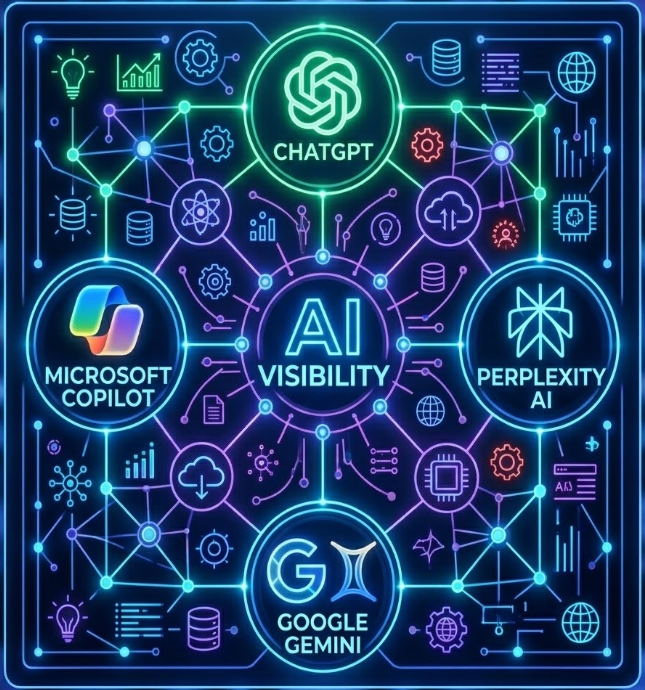
The Technical Side: How to Make Your Content Easy for AI to Read
Getting mentioned by AI isn’t just about what you write, it is also about how your website is built. As this AISO Guide highlights, if AI can’t easily read and understand your content, it simply won’t use it. Here’s what you need to fix
Use Structured Data (Schema Markup)
Schema markup is like a label on your content. Instead of making AI guess what your page is about, it tells AI directly this is a brand, this is an article, this is a FAQ.
Add these three at minimum:
- Organization Schema : your brand name, logo, contact info and social profiles
- Article Schema : author name, publish date and main topic on every blog post
- FAQ Schema : formatted Q&As that AI can pull word for word into its answers
Structure Your Content for AI Scanning
AI crawlers look for clear signals, direct answers, logical headings and clean flow. Make it easy to scan.
What to do:
- Lead with the answer – put the key point at the top, supporting details below
- Write headings as questions – phrase your H2s the way your audience actually asks them
- Use proper HTML tags – H1, H2, H3 in logical order
Include related terms naturally – use synonyms and industry terms so AI understands the full context
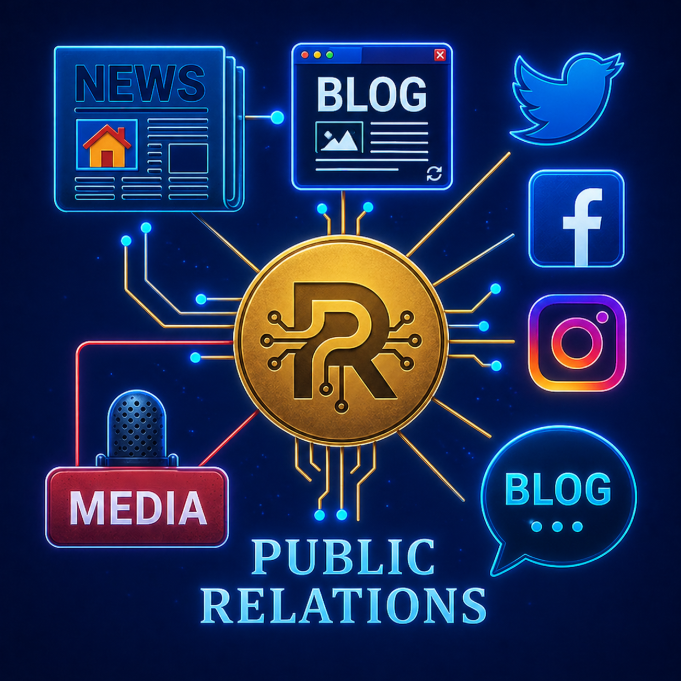
Beyond Your Website: Digital PR Strategies for AI Recognition
Having great content on your website is not enough. AI learns from the entire internet so if your brand only appears on your own site, AI won’t see you as a trusted authority. You need other credible websites to mention and recommend you.
This is where Digital PR comes in.
Ready to Evolve Your Brand?
Get Featured on Trusted Websites
The more your brand is mentioned on respected, high-authority sites, the more AI starts recognizing you as a credible source.
What to do:
- Write guest posts on industry websites not just for backlinks, but to get your brand name mentioned in context on trusted pages
- Send press releases when you have something worth sharing new research, a product launch, a company milestone, or original data
- Reach out to podcasts and industry publications even a mention in a transcript or article adds to your brand’s footprint across the web
Build Social Proof Where AI Is Listening
AI tools heavily scrape platforms like Reddit, Quora, Trustpilot and Google Reviews for real, unbiased opinions. These platforms carry a lot of weight in AI-generated answers.
What to do:
- Encourage happy customers to leave reviews on Google, Trustpilot and similar platforms
- Participate genuinely in Reddit and Quora discussions related to your industry
- The goal is simple the more people talk about your brand positively across the web, the more AI trusts and recommends it
Tracking Your Success: How to Know If Your Strategy Is Working
Doing all the right things is great but you also need to know if it is working.This is where an AISO Guide mindset becomes important, because measuring your visibility in AI answers is very different from tracking traditional SEO rankings. Here is how to do it.
Test AI Platforms Manually
The simplest way to check is to ask AI yourself. Open ChatGPT, Perplexity, Gemini, Copilot and other platforms and ask questions like:
- “What are the best [your service] companies?”
- “Who is a trusted expert in [your industry]?”
- “Recommend a [your product/service] provider”
If your brand comes up, great. If it doesn’t you know where to focus your efforts.
Track Referral Traffic from AI Platforms
AI tools like Perplexity and Copilot send users to websites they cite. Check your Google Analytics or any traffic tool for direct referrals from:
- perplexity.ai
- copilot.microsoft.com
- gemini.google.com
A rise in traffic from these sources is a strong sign that AI is mentioning and linking to your content.
Monitor Branded Search Trends
Keep a Regular Testing Schedule
Partnering with Experts: IndiWork AI Visibility Service Benefits
GEO is not a one-time task. It requires ongoing testing, technical knowledge and a deep understanding of how different AI platforms work. For many businesses, doing all of this in-house takes too much time and resource.
That is where partnering with a specialist makes sense.
IndiWork’s AI Visibility Service is built specifically for this. Their team understands how LLMs find and use information and they handle everything from the technical groundwork to ongoing monitoring.
What they do for your brand:
- Audit your brand’s current entity presence and fix gaps in structured data
- Analyze where your content is missing compared to what AI platforms are looking for
- Build digital PR strategies designed to get your brand mentioned on sources AI trusts
- Track your brand’s visibility and sentiment across all major AI platforms consistently
Want to move faster and skip the trial and error? IndiWork gives your brand a real head start. Because your brand deserves to be the answer AI gives. Get in touch with IndiWork today and let’s make that happen.
The Future of Search is Conversational
People are no longer just Googling, they’re asking AI. And AI is answering with specific brand recommendations, citations and trusted sources. As any effective AISO Guide will show, the brands that appear in these answers are the ones that will win attention, trust & customers in the years ahead.
The shift from keywords to conversations is not coming, it has already happened. Start now. Focus on context, structure, credibility and consistency and make your brand the answer AI gives.

Still have Questions?
What is Generative Engine Optimization and how is it different from traditional SEO?
Generative Engine Optimization (GEO) is the process of optimizing your content so AI tools like ChatGPT, Gemini, and Copilot can find, understand and cite your brand in their answers.Traditional SEO is about ranking higher on search engines to get clicks, while GEO is about becoming the trusted source AI uses directly in its responses
How can I get ChatGPT, Perplexity and Gemini to cite my brand?
Each platform has different preferences:
- ChatGPT – Write detailed, well-structured content with original data, FAQs & clear headings
- Perplexity – Publish fresh content regularly, write around “What,” “How,” and “Why” questions and link to credible sources
- Gemini – Focus on E-E-A-T, add author credentials and keep your Google Business Profile updated
Copilot – Get indexed in Bing Webmaster Tools and earn mentions on news sites and trusted blogs
Why does structured data matter for AI visibility?
Without structured data, AI has to guess what your page is about and when it’s unsure, it leaves you out. Schema markup removes that guesswork. Add at minimum:
- Organization Schema – brand name, logo and contact info
- Article Schema – author, publish date and main topic
- FAQ Schema – direct Q&As AI can pull word for word
Also keep your website, social profiles and directory listings consistent. Conflicting information makes AI exclude your brand.
How does Digital PR help AI recognize my brand?
AI doesn’t just learn from your website it looks at the whole internet. The more your brand shows up on trusted, well-known sites, the more AI sees you as reliable.Focus on writing guest posts for respected websites, sharing press releases with real data or updates, and getting customer reviews on platforms like Google, Trustpilot and Quora. These are places AI often checks to understand real opinions and trust signals.
How do I know if my AI optimization is working?
Track these three things:
- Referral traffic – check Google Analytics for visits from chatgpt.com, perplexity.ai and copilot.microsoft.com
- Manual testing – ask AI platforms monthly “Who are the best [your service] providers?” and see if your brand appears
- Branded searches – monitor your brand name in Google Search Console. Rising branded searches often signal growing AI visibility
How long it will take to see results?
It usually takes a few weeks to a few months to start seeing results. Small improvements can happen in 2–4 weeks, but stronger results like consistent traffic or AI recognition typically take 2–3 months or more.